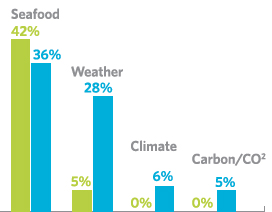
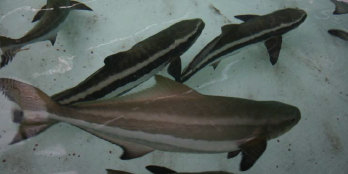
Integrated Multi-trophic Aquaculture (IMTA) utilizes recycled nutrients to provide more environmental friendly systems to produce a variety of marine organisms. With a growing population, we are eating more seafood and society must make a change to a more sustainable and economic means to provide seafood – such as IMTA systems.
For Black, Latin American and Native American students, the largest leak in the STEM pipeline occurs between high school and college. We present the Lamont-Doherty Secondary School Field Research Program as a potential model for intervention by research institutions and departments that can (a) improve college attendance, (b) improve STEM recruitment and (c) invigorate teaching practices at this critical educational gateway.
Real-time data play an important role in science education by adding relevance to the learning experience, by enabling self-discovery and inquiry, and by providing opportunity for dialogue between students and researchers. Over the past decade, profiling floats (such as Argo) have proven to be excellent platforms for deployment of biogeochemical sensors.
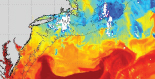
The NERACOOS ocean and weather climate display delivers information about the average weather and ocean conditions between 2001 and 2012. The display also includes information about recent and past years' ocean and weather conditions so that you can compare them to the average conditions from the past decade.
In 2010-2011 we completed a rigorous field campaign to examine the impact of upwelled Modified Circumpolar Deep Water on the Ross Sea ecosystem. Fully integrated with this science plan was a comprehensive education program designed to introduce new audiences to the experience of Antarctic research and the AUV technology used.
The world we live in is increasingly characterized by data. In oceanography, the Ocean Observatories Initiative (OOI), the Integrated Ocean Observing System (IOOS) and other efforts are spurring advances in sensor technologies and cyberinfrastructure that are changing the way oceanographers conduct research and share their results with the world. As we look to train the next generation of scientists, it is imperative that students have the opportunity to develop the skills necessary to collect, analyze and understand data.
Science is a series of questions which can lead to discovery. And fascinating questions will never end as the world is constantly changing. This study evaluated the toxicity of sediment from a canal that runs through both urban and agricultural areas.
From December 2010 through June 2011, Liberty Science Center offered a two-day ocean science program to 208 students and their teachers from 10 public high school in Newark, New Jersey. The program consisted of focused instruction and hands-on activities and labs related to the ocean's physical and chemical characteristics and how these affect biological systems.
This program included several data-oriented lessons developed under the Center for Ocean Science Education Excellence-Networked Ocean World (COSEE-NOW) and was intended to increase ocean literacy in students, enhance their ability to interpret and manipulate data, and raise awareness of how ocean scientists do their work.
In collaboration with the Center for Ocean Sciences Education Excellence California (COSEE CA), scientists at Scripps Institution of Oceanography (Scripps) have worked with a group of three middle school science teachers to teach students how marine natural products research at Scripps connects and contributes to the clinical drug discovery process. The participating San Diego Unified School District 7th grade life science teachers routinely teach a unit on drug discovery to approximately 300 students each year, and enrich the instruction by providing students the opportunity to communicate face-to-face with marine scientists through an interactive videoconference.
A PowerPoint presentation by COSEE-TEK on Teacher Technology Experiences (TTEs), the goals of which are to improve educators’ technology content knowledge, heighten scientists’ awareness of the challenges of science education and outreach, and broaden the impacts of researchers' science and technology by web-based educational resources.
COSEE West – Colorado Collaborative is a partnership that focuses on making ocean sciences relevant to inland audiences; it also exposes teachers from the interior Southwest and Southern California to ocean-/climate-related issues faced by each.
Since 2008, educators have convened for five days during the summer at UCLA, USC and three informal science center partners; NASA/Jet Propulsion Laboratory, Ocean Institute and Cabrillo Marine Aquarium. Throughout the day, hands-on activities engage educators in marine science concepts, ocean observing technology, how to collect data and use online data in the classroom. Each day a featured researcher presents their research using drifters, gliders, satellites or other ocean observing technology, followed by questions and answers. Ocean Literacy Principles are tied to lessons and activities.
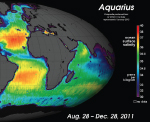
The Aquarius mission is brimming with educational content that hits all four areas of STEM: science, technology, engineering and mathematics. The design and engineering of the satellite, the science of ocean observing, the technical specifications for the mission and the importance of understanding global processes through data can all be illustrated using Aquarius as an example.
In this poster, NASA’s education and outreach team illustrates their multi-pronged approach to creating educational products and opportunities for educators to utilize information and data about Aquarius.
Process studies employing autonomous underwater vehicles (AUVs) off central California have advanced the scientific understanding of harmful algal blooms (HABs), as well as the educational resources to explain them. These process studies gathered multidisciplinary observations from AUVs, moorings, ships, aircraft, and satellites. Moored systems included autonomous robotic biochemistry systems for in situ detection of HAB species and toxins.
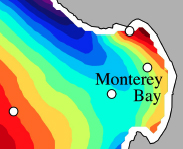
Integrating the knowledge gained from a series of process studies, we developed a visualization of processes that influence bloom ecology in Monterey Bay, California. This visualization, rendered to static and dynamic content, emphasizes how HAB ecology is profoundly influenced by processes that originate at the boundaries of coastal marine ecosystems. In its dynamic form, the illustration is presented in language that is accessible to resource managers and the general public.
A poster presentation of the Lamont-Doherty Secondary School Field Research Program in Piedmont Marsh, including a description of the marsh, list of participants, and information on plankton tows, sediment accretion, fish, phragmites, soil carbon, hydrology, and nutrients concentrations.
We believe that public outreach is one of our duties to society. We organize activities in order to popularize oceanography and the impact of climate change on marine ecosystem in the schools. The activities are mainly proposed to 10-12 year old children and they are organized in two meetings. These activities started in the framework of the European IP Project SESAME (Southern European Seas: Assessing and Modeling Ecosystem changes), but they continue today.
In 2007, The Island School launched the BESS Program targeting the next generation of Bahamian leadership who will be most important for the social, environmental, and economic stability of this island nation.
BESS students enroll in a year-long, high school post-graduate program that includes a semester at The Island School and a six-month internship at a conservation-related organization such as Bahamas Reef Environment Education Foundation, the Bahamas National Trust, or the Cape Eleuthera Institute. The internship gives students real-world work experience and helps them develop an understanding of the environmental and conservation issues that are of primary importance to The Bahamas.
This eight-page tabloid, funded through a Protect Our Reefs grant made to the Smithsonian Marine Station at Fort Pierce, contains information on coral reef ecosystems, with quizzes, a word search, and a word scramble!
Dolphins in the Indian River Lagoon with lesions inspired this study of the level of toxicity in fish flesh using a unique method called "Microtox". This method utilizes the level of bioluminescence in bacteria to identify toxicity in fishes. In this experiment the toxic chemical identified was the heavy metal, mercury.